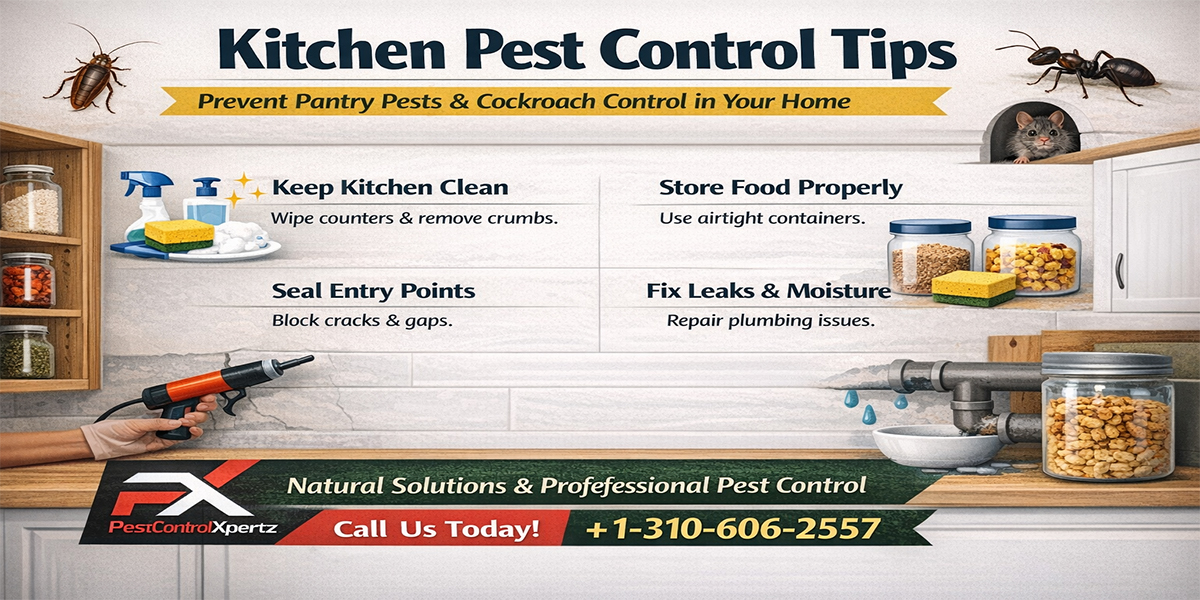
Keeping your kitchen clean is not just about hygiene it’s about protection. Kitchen pests can contaminate food, spread bacteria and damage your home. Whether you're dealing with ants, cockroaches, rodents or pantry insects, prevention is always easier and more affordable than emergency treatment.
In this comprehensive guide, we’ll explain how to prevent kitchen pests naturally, when to consider professional pest control services and how to maintain a truly pest-free kitchen environment.
Common Kitchen Pests You Should Watch For
The most common kitchen pests in homes include:
-
Ants
-
Cockroaches
-
Mice and rats
-
Pantry moths and grain beetles
These pests are attracted to food crumbs, moisture, and warmth. If left untreated, they can multiply quickly and lead to serious infestations.
1. Maintain a Strict Cleaning Routine
One of the most effective kitchen pest prevention tips is maintaining cleanliness.
Daily Cleaning Checklist:
-
Wipe countertops after every meal
-
Sweep and mop floors regularly
-
Wash dishes immediately
-
Clean spills as soon as they happen
-
Take out trash daily
Weekly Deep Cleaning:
-
Clean under appliances
-
Wipe cabinet interiors
-
Sanitize sink drains
-
Check pantry shelves
Clean kitchens reduce food sources, making it harder for pests to survive.
2. Store Food in Airtight Containers
Improper storage is one of the biggest causes of pantry infestations.
Best practices for preventing pantry pests:
-
Store flour, rice, cereals, and sugar in sealed containers
-
Keep pet food in airtight bins
-
Avoid storing food in paper packaging
-
Refrigerate fruits when possible
This simple step significantly reduces the need for emergency pest removal services later.
3. Control Moisture to Prevent Cockroaches
Moisture attracts cockroaches and rodents. If you're wondering how to get rid of cockroaches in the kitchen start with water control.
Check for:
-
Leaking pipes
-
Dripping faucets
-
Damp sponges
-
Water pooling near sinks
Fix plumbing issues quickly to support effective cockroach control in kitchen areas.
4. Seal Entry Points to Block Pests
Pests enter through small cracks and gaps. Effective home pest prevention includes:
-
Sealing cracks in walls
-
Installing door sweeps
-
Repairing window screens
-
Blocking pipe gaps under sinks
This prevents the need for expensive Rodent Control Services later.
5. Manage Kitchen Garbage Properly
Garbage attracts ants, flies, and rodents.
To improve kitchen hygiene and pest control:
-
Use a bin with a tight lid
-
Take trash out daily
-
Clean bins weekly
-
Keep outdoor bins away from entrances
Waste management plays a major role in long-term pest prevention.
6. Use Natural Pest Control Methods
If you prefer chemical-free solutions, try natural pest control for kitchens:
-
Peppermint oil for ants and mice
-
Bay leaves for pantry insects
-
Vinegar spray to remove ant trails
-
Cloves to repel insects
Natural remedies work well for prevention but may not replace professional pest extermination services during severe infestations.
7. Inspect Groceries Before Storing
Many infestations begin with contaminated food packaging.
Before storing groceries:
-
Check for torn packaging
-
Look for webbing inside flour or cereal boxes
-
Avoid expired goods
Freezing dry items for 48 hours helps prevent pantry moth infestations.
8. Watch for Early Signs of Infestation
Early detection supports quick pest control treatment.
Signs include:
-
Droppings in cabinets
-
Chewed food packets
-
Unpleasant odors
-
Grease marks on walls
-
Scratching noises
If signs persist, consider contacting professional pest control near you for inspection.
9. Schedule Preventive Pest Control Services
Even clean kitchens can face seasonal pest problems. Preventive residential pest control services offer:
-
Routine inspections
-
Safe treatments
-
Long-term protection plans
-
Expert guidance
Quarterly treatments are highly recommended in humid regions where pest activity is higher.
Kitchen Pest Prevention Checklist
|
Task |
Frequency |
|
Wipe counters |
Daily |
|
Sweep & mop |
3–4 times weekly |
|
Empty trash |
Daily |
|
Inspect pantry |
Monthly |
|
Check plumbing |
Monthly |
|
Schedule pest control |
Quarterly |
Consistency ensures effective year-round pest control protection.
Seasonal Kitchen Pest Control Tips
Summer Pest Control
-
Increased ant activity
-
Keep windows sealed
-
Avoid leaving sugary spills
Monsoon Pest Prevention
-
High moisture attracts roaches
-
Improve ventilation
-
Use dehumidifiers
Winter Rodent Prevention
-
Seal exterior cracks
-
Store dry foods properly
-
Monitor attic and storage areas
Seasonal awareness supports strong preventive pest management strategies.
Final Thoughts
Preventing unwanted kitchen pests requires consistency, awareness, and proactive maintenance. Cleanliness, proper storage, moisture control, and sealing entry points form the foundation of effective kitchen pest control solutions.
By following these strategies, you reduce the risk of infestation and minimize the need for emergency pest removal services. However, if pests persist despite your efforts, consulting a trusted professional pest control company ensures safe and lasting results.
Don’t wait until a small problem becomes a major infestation. Protect your home today with trusted pest control solutions from Pest Control Xpertz. Call +1-310-606-2557 now and enjoy a clean, pest-free kitchen year-round.
