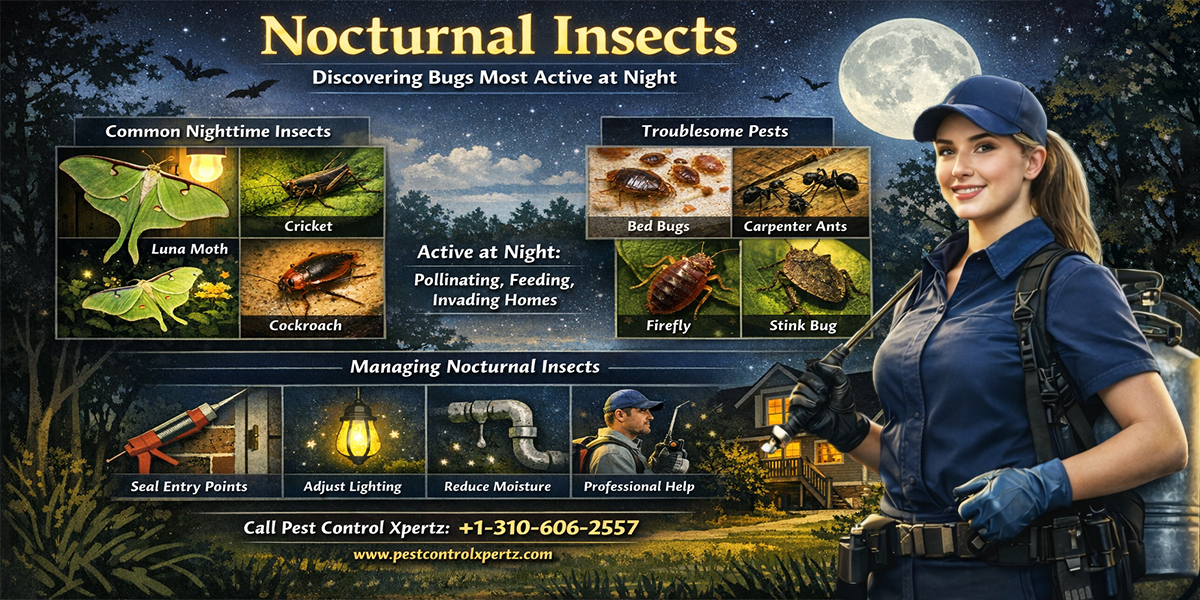
When the sun dips below the horizon and darkness settles in, an entirely different ecosystem comes alive. While most of us are winding down, nocturnal insects begin their busiest hours pollinating flowers, searching for food, communicating with mates and sometimes invading homes.
Understanding these nighttime insects isn’t just fascinating it’s essential for protecting your home and appreciating the balance of nature.
What Are Nocturnal Insects?
Nocturnal insects are species that are primarily active during nighttime hours. Instead of relying heavily on vision, they depend on heightened senses like smell, vibration detection and heat sensitivity to navigate in low-light conditions.
Some use moonlight for orientation, while others are attracted to artificial lights around homes and businesses. Their nighttime behavior helps them:
-
Avoid daytime predators
-
Reduce water loss in cooler temperatures
-
Access night-blooming flowers
-
Feed undisturbed
Common Nocturnal Insects
Moths
Moths are among the most recognizable nocturnal insects, with over 160,000 species worldwide.
-
Luna Moths are large, pale green, and often seen around porch lights in summer.
-
Hawk Moths are fast flyers and sometimes mistaken for hummingbirds.
Many moths are vital pollinators, especially for night-blooming plants.
Crickets
Crickets are famous for their nighttime chirping. That rhythmic sound is produced by males rubbing their wings together to attract females.
They feed on:
-
Decaying plant matter
-
Fungi
-
Smaller insects
While generally harmless outdoors, indoor crickets can damage fabrics and paper.
Cockroaches
Cockroaches prefer dark moist environments and typically emerge at night to search for food and water.
If you see roaches during the day, it may signal overcrowding and a more serious infestation. Their presence often indicates:
-
Moisture problems
-
Food residue buildup
-
Structural entry points
Early intervention is critical.
Fireflies
Also known as lightning bugs fireflies use bioluminescence to attract mates. Their soft glow is one of summer’s most magical sights.
They’re beneficial because their larvae feed on:
-
Slugs
-
Snails
-
Garden pests
Ants (Carpenter Ants)
While many ants are active during the day carpenter ants often forage at night. They seek:
-
Sugary foods
-
Proteins
-
Moist wood
Unlike termites, they don’t eat wood but they tunnel through it, which can weaken structures over time.
Bed Bugs
Bed bugs are primarily nocturnal and feed on human blood while hosts sleep.
Although most active at night they will feed during the day if hungry enough. Signs include:
-
Small blood spots on sheets
-
Itchy bite clusters
-
Dark spotting along mattress seams
Because infestations grow quickly, professional treatment is often necessary.
Stink Bugs
Stink bugs are active at night and may invade homes during cooler months seeking shelter. When threatened they release a strong odor as a defense mechanism.
The Importance of Nocturnal Insects
Nocturnal insects play essential ecological roles:
-
Pollination – Moths pollinate night-blooming flowers.
-
Food Source – Bats, birds, reptiles, and amphibians rely on them.
-
Soil Health – Some species help decompose organic material.
-
Natural Pest Control – Firefly larvae and others feed on harmful pests.
Despite their benefits, certain species can become problematic indoors.
Managing Nocturnal Insects Around Your Home
1. Maintain Cleanliness
-
Clean kitchens nightly
-
Store food in airtight containers
-
Take trash out regularly
2. Seal Entry Points
-
Repair cracks in walls
-
Install door sweeps
-
Fix window screens
3. Adjust Outdoor Lighting
-
Use yellow bug bulbs
-
Turn off unnecessary exterior lights
4. Reduce Moisture
-
Fix plumbing leaks
-
Use dehumidifiers
-
Improve ventilation
5. Professional Pest Control
If infestations become established professional intervention is often the safest and most effective solution.
For expert assistance Call +1-310-606-2557. The experienced technicians at Pest Control Xpertz can assess nocturnal pest activity and recommend targeted treatment solutions to keep your home protected.
Nocturnal Insects – Q&A
What do cicadas sound like?
Cicadas produce a loud buzzing or droning sound, often compared to an electric hum. Males use specialized structures called tymbals to create mating calls. Large groups can sound almost mechanical during warm seasons.
Can flies see in the dark?
Flies cannot see in complete darkness but are highly sensitive to low light. Their compound eyes detect motion and subtle light shifts, though their activity decreases in total darkness.
Can mosquitoes see in the dark?
Mosquitoes rely more on heat detection, carbon dioxide and scent than vision. These adaptations allow them to remain active at night even with limited visibility.
Do bed bugs only come out at night?
Bed bugs prefer nighttime feeding but will emerge during the day if hungry. Darkness simply provides safer feeding conditions.
What is the purpose of cicadas?
Cicadas aerate soil, contribute to nutrient cycling, and serve as a major food source for wildlife. Their egg-laying can also stimulate tree growth through natural pruning.
Final Thoughts
Most pest problems remain “out of sight, out of mind” until they become severe. Because nocturnal insects operate while we sleep, infestations can grow unnoticed.
By understanding nighttime insect behavior, homeowners can take preventive steps early protecting both their property and the surrounding ecosystem.
If you suspect nocturnal pest activity in your home or business don’t wait. Visit www.pestcontrolxpertz.com or call +1-310-606-2557 to speak with an expert today.
